
7 Ways Artificial Intelligence Is Improving Efficiency in the Oil and Gas Industry
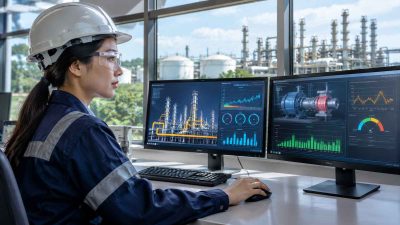 Oil and gas companies face constant pressure to control operating costs while maintaining reliable production. Fluctuating fuel prices, expensive equipment maintenance, strict safety requirements, and changing energy demand create financial uncertainty. Companies must also improve energy efficiency and limit environmental impacts. These challenges make operational planning increasingly complex, particularly for businesses managing large facilities, pipelines, and transportation networks.
Artificial intelligence is becoming an important tool for addressing these pressures. Energy companies are introducing machine learning, computer vision, and predictive analytics across exploration, production, transportation, and refining operations. These technologies process large datasets and identify patterns that traditional methods may overlook. Preparing reliable training datasets is equally important. Some organizations consider data labeling outsourcing when developing AI systems that require extensive technical information.
How AI Is Changing Oil and Gas Operations
The International Energy Agency (IEA) identifies digital technologies as potential tools for improving energy operations and reducing waste. Meanwhile, research from the National Institute of Standards and Technology (NIST) highlights how industrial AI supports predictive monitoring, production planning, and process improvement.
For oil and gas operators, these developments create opportunities to improve decisions without replacing experienced engineers. Seven applications illustrate where AI can provide measurable operational value.
1. Predictive Maintenance Reduces Unexpected Equipment Failures
Unexpected machinery failures can interrupt production and create substantial repair expenses. Pumps, compressors, turbines, and drilling equipment operate under demanding conditions, making regular monitoring essential.
AI-powered predictive maintenance systems analyze vibration readings, temperature changes, pressure measurements, and equipment histories. Machine learning models identify unusual patterns that may indicate developing mechanical problems.
The NIST has documented the importance of data-driven monitoring in modern industrial operations. For energy companies, predictive maintenance can help prioritize inspections, schedule repairs, and reduce unnecessary servicing.
However, equipment specialists must verify automated warnings before making maintenance decisions.
2. AI Makes Pipeline Inspection More Efficient
Pipelines transport crude oil, natural gas, and refined petroleum products across extensive networks. Corrosion, cracks, and structural damage can threaten operational safety and create costly disruptions.
Computer vision systems can examine inspection photographs, drone footage, and other visual records. AI models help identify suspicious surface conditions, while machine learning can analyze measurements collected by pipeline inspection instruments.
The Pipeline and Hazardous Materials Safety Administration (PHMSA) identifies corrosion, deformation, and cracking as important pipeline integrity concerns. Its guidance emphasizes regular assessments and appropriate corrective action.
These AI systems depend on accurately annotated images and sensor measurements. Specialists must identify defects consistently so algorithms can distinguish genuine damage from harmless surface variations. Poor labeling may produce missed warnings or unnecessary inspections.
3. Fuel Demand Forecasting Supports Better Supply Decisions
Petroleum demand changes with economic activity, transportation patterns, weather conditions, and seasonal travel. Understanding energy trends and economic shifts can help businesses recognize how market developments influence fuel consumption and purchasing decisions. Inaccurate forecasts can create inventory shortages or unnecessary storage expenses.
AI forecasting tools examine historical consumption, economic indicators, pricing trends, and distribution records. These systems can recognize relationships that help planners estimate future requirements.
The U.S. Energy Information Administration (EIA) regularly publishes energy forecasts using market information and economic assumptions. AI offers another analytical approach that companies can combine with established forecasting methods.
Better estimates support purchasing decisions, refinery production schedules, and regional fuel distribution.
4. Refinery Optimization Helps Reduce Waste and Energy Consumption
Refineries use interconnected industrial processes that require careful control of temperatures, pressures, material flows, and energy consumption. Small operating inefficiencies can accumulate across large production facilities.
Machine learning models examine operational records to identify conditions associated with better performance. Engineers can use these findings to adjust equipment settings, improve process stability, and investigate unnecessary energy consumption.
The IEA has emphasized industrial energy efficiency as an important component of energy management. AI-assisted optimization may support this objective when facilities maintain reliable sensors and effective operational controls.
Changes still require engineering review to protect equipment, product quality, and workplace safety.
5. Automated Safety Monitoring Helps Identify Workplace Hazards
Oil and gas facilities contain high-pressure equipment, combustible materials, heavy machinery, and potentially hazardous working environments. Safety teams must monitor numerous activities while following established procedures.
AI-assisted cameras and sensor systems can help detect restricted-area access, missing protective equipment, unusual operating conditions, and possible gas-related hazards.
The Occupational Safety and Health Administration (OSHA) emphasizes hazard identification and preventive controls in workplace safety programs.
Automated monitoring can support these efforts by highlighting conditions requiring attention. However, it cannot replace employee training, emergency procedures, or qualified safety personnel.
6. Geological Analysis Improves Exploration Data Processing
Oil and gas exploration requires specialists to interpret seismic surveys, geological structures, and underground rock characteristics. These datasets can be enormous and time-consuming to examine.
Machine learning helps geoscientists identify geological faults, rock boundaries, and other subsurface features. Energy technology company SLB offers machine learning applications designed to support seismic interpretation and reservoir modeling.
Training these systems requires carefully classified seismic images and geological measurements. Experts must identify relevant formations and verify technical labels. External annotation specialists may assist with large datasets, provided appropriate quality controls and confidentiality safeguards are maintained.
AI can accelerate initial analysis, but geological uncertainty remains. Exploration decisions still require professional interpretation and additional evidence.
7. Supply Chain AI Improves Transportation and Distribution Planning
Energy companies coordinate fuel shipments, storage facilities, equipment deliveries, and transportation schedules across multiple locations. Delays can increase costs and disrupt customers.
AI logistics systems evaluate delivery histories, inventory levels, transportation capacity, and expected demand. Their recommendations may help planners adjust routes, reduce unnecessary movements, and improve delivery scheduling.
The World Economic Forum (WEF) has examined how digital technologies can improve supply chain visibility and operational resilience.
For energy companies, effective logistics planning can strengthen coordination between refineries, storage terminals, and distribution networks.
What Should Companies Consider Before Investing in AI?
Artificial intelligence offers opportunities to reduce operating expenses, improve reliability, and support more informed decisions. However, implementation requires investment in software, sensors, infrastructure, employee training, and technical expertise.
Data security also deserves attention, particularly when industrial systems handle commercially sensitive information. The NIST emphasizes trustworthy AI, reliable data management, and effective risk controls.
Companies should evaluate results through practical indicators such as equipment downtime, maintenance expenses, energy consumption, and safety performance. Pilot projects can help establish whether expected benefits justify costs.
As AI technology develops, its strongest contribution may come from supporting experienced workers with faster analysis and clearer operational information. Sustainable efficiency improvements will depend on reliable data, responsible implementation, and measurable financial outcomes.

